How profitable is a Vending Machine Business | My Experience
How profitable is a Vending Machine Business | My Experience

By Julian Croft
Updated July 25, 2025
1. Why I Started a Vending Machine Business (Even Though I Hate Small Talk)
I was sitting in an office lobby, waiting for an interview I wasn’t even sure I wanted.
The job was fine on paper. Decent pay, benefits, all that.
But I’d been doing this dance for years—suit up, show up, smile, answer the same questions about where I saw myself in five years. Every time I walked into one of these places, I felt myself shrink a little.
Anyway, I was early, so I sat there watching people come and go. It was one of those busy offices with a steady stream of employees buzzing around. And right there in the corner was a vending machine.
Nothing fancy. Just a standard snack and drink machine.
But I kept watching it. People walked by, swiped their cards, grabbed a soda or a bag of chips, and went back to their desks. No interaction. No small talk. No employee of the month pressure.
Just a box that sat there, quietly doing its job while its owner was somewhere else—probably sleeping, or working another job, or just living their life.
I didn’t get the job, by the way. Honestly, I was relieved.
But I couldn’t stop thinking about that machine.
That was about a year ago. Today, I run two machines with a third on the way. I’m not rich, and I’m definitely not “retired.” But I’ve built something that works with who I am, not against it.
And the funny thing? The real lessons didn’t come from any guru or course. They came from late-night research, a few mistakes, and one piece of advice that changed everything for me: Don’t try to do it alone.
2. What I Learned About the Money (The Numbers That Mattered)
When I started looking into vending machines, I kept seeing the same flashy headlines: “Make $5,000 a Month With One Machine!” I wanted to believe it. Who wouldn’t? But after spending hours in forums, Reddit threads, and Facebook groups, a different picture emerged.
Most people with one or two machines were making somewhere between $200 and $700 a month per machine.
The ones making more had either found a killer location or had been doing it for years.
That matched my experience.
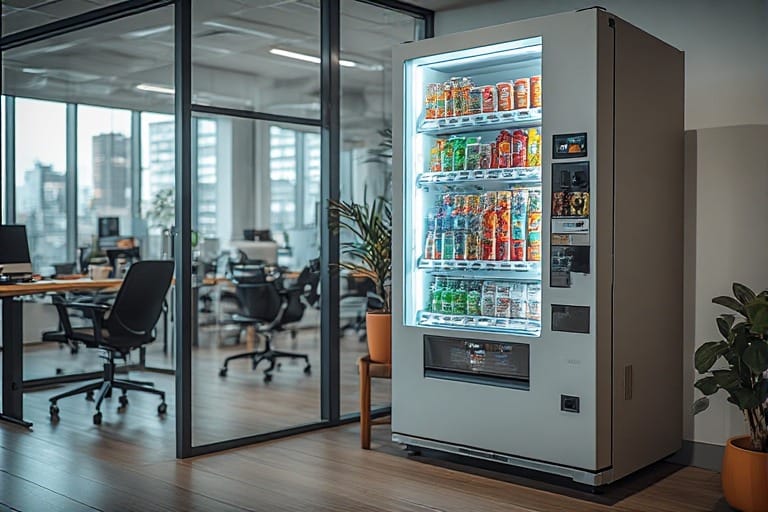
Machine #1: I placed it in a small office building with about 40 employees. No commission deal—just a handshake agreement. It does $400–$500 a month in sales. After restocking costs and the occasional repair, I keep around $200–$300.
Machine #2: This one took longer to find. I finally landed a spot at a car wash with decent foot traffic. We agreed on 10% commission to the owner. It does $450–$600 a month. After commission and costs, I pocket $250–$400.
Not life-changing money. But it covers my car payment and then some, and I probably spend 5–6 hours a week total on restocking and maintenance.
What I spent to Start
| EXPENSE | MACHINE #1 | MACHINE #2 |
|---|---|---|
| MACHINE (REFURBISHED, NEW) | $2600 | $5100 |
| INITIAL INVENTORY | $400 | $500 |
| CARD READER INSTALLATION | $250 | $250 |
| DOLLY/HARD TRUCK | $150 | -- |
| TOTAL | $3400 | $5850 |
*Prices may have changed at the moment of writing this.
If you're wondering—yes, you can find cheaper machines.
I saw some on Facebook Marketplace for $800. But I learned quickly that older machines break more often, and every repair eats into your profit. Paying a bit more upfront saved me headaches later.
Here's what I also learned about both types of machines:
Profit Margins by Product Type
| PRODUCT TYPE | PROFIT MARGIN |
|---|---|
| COLD DRINKS | 45-55% |
| SNACKS | 35-45% |
| ENERGY DRINKS | 50-60% |
| HEALTHY SNACKS | 40-50% |
The best margins come from items people don't think twice about buying. A $1.50 soda that costs me $0.65 adds up fast when you sell 15 of them a day.
Or cotton candies. Much easier to move out since the demand is high especially when the location suits.
The Biggest Financial Lesson
I learned this the hard way: a good location makes an average machine profitable. A bad location makes a great machine useless.
Before I found the car wash spot, I tried placing a machine at a small gym. Seemed logical—people work out, they get thirsty, right? Wrong. I sold maybe $80 in two months. The owner was nice about it, but I pulled the machine and ate the loss.
That’s when I started offering commissions to location owners. Not because I wanted to give away money—but because it gave me access to spots other operators weren’t getting.
One owner told me straight up: “You’re the first person who offered me a cut. Everyone else just asked to put the machine for free.”
That deal got me exclusivity. No other machines in his building. And that’s when the numbers started making sense.
3. The "Passive" Part Is Real—But Not What You Think
I need to clear something up before we go any further.
When people hear "passive income," they imagine money showing up in their bank account while they're sipping cocktails on a beach. That's not this. At least not at first.
But here's what I've learned: semi-passive is still pretty great when the alternative is sitting through another all-hands meeting or pretending to care about someone's weekend plans.
What a Typical Week Looks Like
With two machines, I spend about 5–6 hours a week on the business. Here's how that breaks down:
Restocking: Every two weeks, I spend 2–3 hours visiting both locations, checking inventory, and refilling what's low.
Cash collection: I check the machines weekly. The car wash location still has cash users, so I pull bills and make sure the card reader is working.
Problem solving: Maybe once a month, something goes wrong. A jammed spiral. A card reader that won't connect. A machine that mysteriously stopped accepting $5 bills. That's usually another hour or two.
The rest of the time? Nothing.
The machines just sit there, doing their thing.
One morning I woke up to a notification from my card reader app: $87 in sales overnight. I was still in bed. That feeling never gets old.
It might not a lot for some people but common it's still money I earned while sleeping.
Why I Still Call It Passive (Sort Of)
I think about it like this: I put in concentrated bursts of work so I can have long stretches of nothing.
A typical 9-to-5 job spreads your energy thin across five days. With vending, I knock out everything in one afternoon and then I'm free. No emails. No Slack messages. No one asking me for "five minutes" that turn into an hour.
That freedom is worth more than the money to me.
The Honest Truth
If you want to scale to 10 or 20 machines, the "passive" label starts to fade unless you hire help. I've talked to operators with big routes who spend 20+ hours a week restocking, fixing machines, and hunting for new locations. That's a job. A flexible, solo-friendly job—but a job.
That's how you should handle it. As a business. No one is an island or an octopus, split the profits, delegate to make it more passive.
For now, with two machines (and a third soon), I've found my sweet spot. Enough income to feel worth it. Not so much work that I feel tied down.
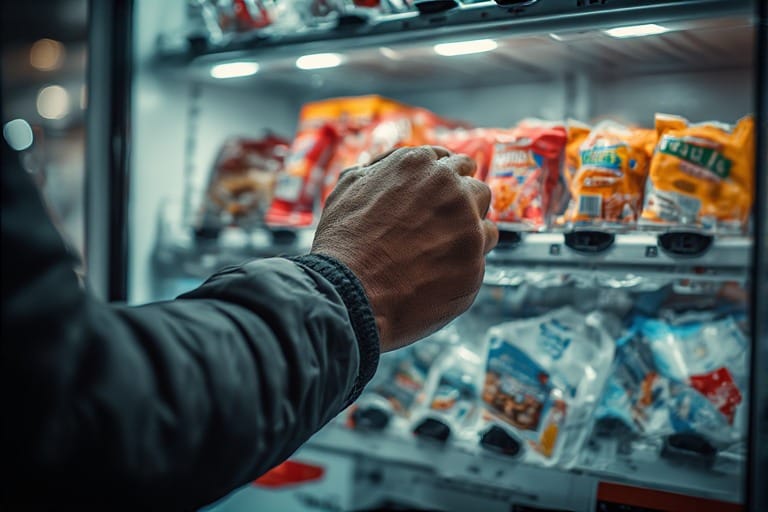
And honestly? Restocking is kind of meditative. I throw on a podcast, drive around, stock shelves, solve little puzzles. No one interrupts me. No one asks for anything. It's just me and the work.
For someone who spent years forcing themselves to be "on" for other people, that alone is a win.
The other way around is having a deal with someone to do it on your behalf. That way you get more time in exchange of a small remuneration.
4. The Mistakes Nobody Warned Me About
I'd love to tell you everything went smoothly from day one. It didn't.
Looking back, I made some dumb mistakes.
The kind that make you stare at a machine and ask yourself why you thought this was a good idea. But those mistakes taught me more than any successful month ever did.
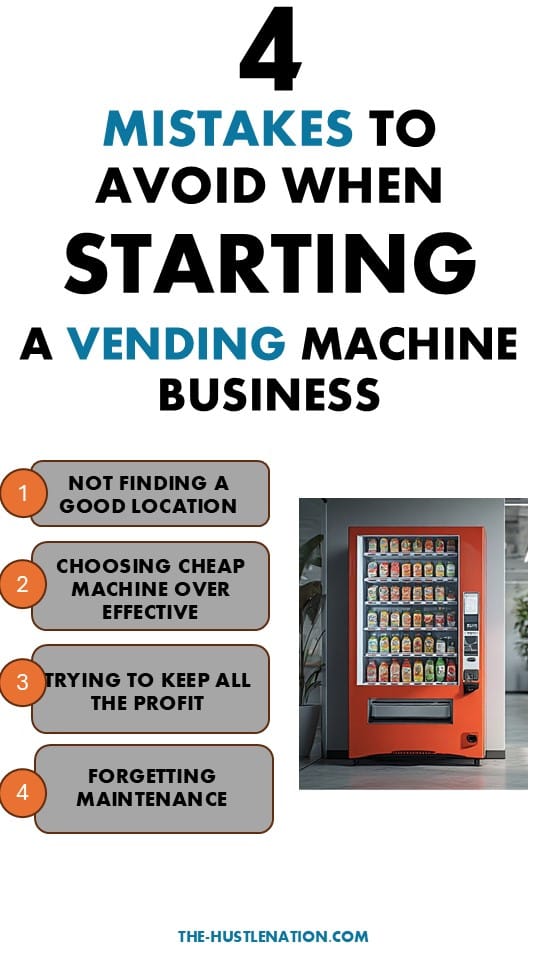
Mistake #1: Assuming a "Good Location" Without Watching It First
Remember that gym I mentioned earlier? I saw people walking in and out and thought, "Perfect. Active people. They'll buy drinks."
I didn't sit there and watch. I didn't ask the owner what people actually bought. I just dropped the machine in and hoped.
Turns out, that gym had a water fountain right next to the entrance and a smoothie bar inside. Nobody was buying bottled drinks from a machine when they could get a fresh smoothie for a few dollars more.
As a result,
I lost about $400 on that machine between the purchase, the move, and the inventory that sat there for two months before I pulled it.
What I do now is this: Before I commit to any location, I sit and watch. Sometimes for an hour. Sometimes I'll stop by at different times of day. I look for patterns. Do people come in with coffee already? Are they carrying water bottles? What's the flow?
It sounds simple, but skipping that step cost me real money.
Mistake #2: Being Too Cheap on the First Machine
My first machine was a Facebook Marketplace special. $800 for an old snack machine that "worked perfectly."
It didn't.
The bill acceptor jammed every third transaction. The card reader I installed kept losing connection. I was driving out there twice a week to fix something, and every repair chipped away at whatever profit I was making.
After three months of frustration, I sold it for parts and bought a refurbished machine from a local vendor. Cost me $2,200. I haven't had a single mechanical issue in eight months.
Lesson: Buy once, cry once. A reliable machine is worth the upfront cost.
Mistake #3: Trying to Keep All the Profit
When I started, I thought commissions were for suckers. Why give away money I earned?
Then I spent months getting rejected by location owners. "We already have a machine." "Not interested." "We don't want the hassle."
Once I started offering 10–15% of sales, doors opened. Suddenly owners saw me as a partner, not someone trying to take space for free.
One owner told me the previous operator had been there for years, paying nothing. When that guy retired, the owner was ready to let the space sit empty. I offered 12% and got a three-year exclusivity deal.
That machine now makes more than both my previous machines combined. The 12% I give away is money I wouldn't have at all if I'd stuck to my "keep everything" mentality.
Mistake #4: Forgetting to Check for Other Machines
This one sounds obvious, but I missed it.
I placed a machine at a small warehouse, excited about the 50 employees who'd have access. A week later, I walked around the corner and found another machine tucked in the break room. Same products. Same prices. Owner didn't mention it when we talked.
Now I do a full walkthrough of any potential location. I check every corner, every break room, every hallway. If there's already a machine there, I either move on or make a better offer.
The Takeaway
Every mistake cost me something—time, money, or pride. But each one made the next decision better.
If you're starting out, expect to mess up. Just try to make your mistakes on small things before you scale.
5. Would I Do It Again? (And Who This Is Actually For)
If I could go back to that office lobby, sitting there waiting for an interview I didn't want, and someone told me I'd end up with vending machines a year later?
I'd probably laugh.
Then I'd ask where to start.
Because yeah, I'd do it again. Without hesitation.
But I also wouldn't pretend it's for everyone. I've met people who tried vending and hated it. They wanted something truly passive—money that shows up without any effort. That's not what this is. At least not in the beginning.
Who This Actually Works For
From what I've seen and experienced, vending works well if:
You don't mind physical work.
Restocking means lifting cases of drinks, carrying coins, hauling product. It's not construction work, but it's not sitting at a desk either. I actually like the movement after years of being chained to a chair.
You're okay with solitude (while working). Most of this business happens alone. Driving. Restocking. Researching locations. If you need people around to feel motivated, this might feel isolating. For me, it's the best part.
You can handle unpredictability. Machines break. Locations underperform. Card readers glitch. You can't control everything. If you're the type who needs steady, predictable income, vending will stress you out.
You have some money saved up. Starting with one machine cost me around $3,000. That's not nothing. And there were months where profit was thin while I figured things out. Having a cushion made those months less scary.
Who Should Probably Skip It
On the flip side, if you're looking for:
Get-rich-quick returns
Completely hands-off income
No upfront investment
Guaranteed monthly profit
Man, This isn't your thing. And that's okay. Better to know that now than after buying a machine.
Where I'm At Now
I've got two machines running smoothly, a third in the works, and I'm always keeping an eye out for the right location. I'm not trying to build an empire. I just want enough machines that the income feels meaningful without the work becoming overwhelming.
Three or four machines feels like my sweet spot. Enough to matter. Not so many that I lose the flexibility I started this for.
And honestly? Every time I drive past that office building where I had my interview, I smile a little. Not because I'm bitter—I barely remember the job.
But because that waiting room showed me something I needed to see.
Sometimes the best opportunities are the ones quietly working in the corner while everyone else is rushing past.
6. Quick Answers to the Questions I Get Asked Most
Every time I mention the vending machines to someone, I get the same questions. So I figured I'd put them all in one place.
How much money do you actually make?
With two machines, I average $400–650 a month in profit. Some months are better (holidays, summer), some are slower (January is always rough). The car wash machine does more in summer. The office machine dips when people are on vacation.
If I hit my goal of three machines, I expect to be in the $700–900 range consistently.
How much time does it take?
About 5–6 hours a week total. Most of that is restocking every two weeks. The rest is random fixes, checking cash, and scouting new locations.
Some weeks I do nothing. Literally nothing. The machines just run.
What about theft and vandalism?
I was nervous about this too. So far, no issues.
I avoid placing machines in high-risk areas—no 24-hour laundromats in rough neighborhoods, no unsupervised lots. Both my machines are inside businesses with cameras and regular foot traffic.
That's also why I offer them a cut - security inside their location.
The card readers also help. Less cash in the machine means less temptation.
Do you need a car?
Yes. Unless your machines are within walking distance (unlikely), you'll be driving. A small SUV or hatchback works fine. I use a folding hand truck to move inventory.
What if something breaks?
Most issues are simple. Jammed products, bill acceptors acting up, card readers losing signal. I learned basic fixes from YouTube and vending forums.
For bigger problems, I have a local repair guy I trust. He charges $75–150 depending on the job. I factor that into my monthly budget.
How do you find locations?
This was the hardest part.
I started with places I already had connections to—a friend who owned a small office, a car wash I went to regularly. After that, I started offering commissions to owners.
My approach now: I walk into a business, ask for the owner or manager, and say something like:
"Hi, I run vending machines. I'm looking for a spot to place one. I handle everything—machine, stocking, maintenance—and I pay you a percentage of sales. No cost to you. You interested?"
It's short surprisingly working, and shows I'm not asking for a handout. About 3 in 10 conversations turns into a yes.
Can you do this while working a full-time job?
Absolutely. I started while working full-time. The flexibility is the whole point.
You restock on weekends or after work.
Most locations don't care when you show up as long as the machine stays full.
What's the one thing you wish you knew before starting?
That relationships matter more than machines.
I spent so much time researching equipment and products. But the game changer was when I started treating location owners like partners instead of gatekeepers. The 10–15% commission I give away comes back in steady income, exclusivity, and owners who actually want me there.
You can't make money by yourself. Find the right people to work with.
Final Words
I didn't start this to get rich. I started it because I wanted something that worked with my life instead of against it.
Two machines in, a third on the way, and a little over $500 a month coming in. It's not a fortune. But it's mine. Built quietly, on my terms, without pretending to be someone I'm not.
If you've been sitting on the idea, wondering if it's worth trying, here's what I'd say:
Start small. Buy one machine used. Find one decent location. See if the rhythm of it fits you.
Worst case, you lose a few thousand dollars and sell the machine. Best case, you build something that gives you more freedom than you had before.
Either way, you'll know.
And if you end up like me—driving around with a podcast, stocking snacks, watching the notifications roll in while you're still in bed—you might just find it was worth the leap.
COMMENTS
BE THE FIRST TO LEARN NEW WAYS TO MAKE MONEY
Learn how to earn money without being 100% involved in the process. Even if you're a beginner.
Learn how to start a private community where people will pay to access your content.
Algorithmic trading uses trading advisors to place trades on the markets to earn profits while you're somewhere else.
12 creative and realistic ideas to turn 10k into 100k for profit. Read more

The New Way to Start Affiliate Marketing. How to make it less time consuming while earning more even as a beginner. Read more
CREATE YOUR OWN TRADING BOT FOR FREE
LET AI TRADE FOR YOU 24/7

By Julian Croft
Julian Croft (Jesse) is the founder of The Hustle Nation, a blog dedicated to helping introverts build genuine passive income (not the hyped one) through faceless, sustainable methods. After a decade in data analysis, he now uses his research skills to cut through the online hype and deliver actionable, trustworthy advice.




The Hustle Nation is your #1 community to find passive income ideas for introverts, side hustle ideas, online side jobs. Join part-time hustlers on the path to financial freedom with proven strategies, tools, and inspiration to benefit from your free time. Learn newest tricks to earn money on the internet without showing your face on a camera. All our posts are not financial advise. Always do Your Own Research for informed decision.